NOTE: not all images have finished loading. Please cancel printing, wait a few moments and try to print again. All images should then be visible.
The Munster Bush Restoration Project
By Samantha Prigge
It was all hands on deck on Saturday 23 May 2026 as Munster Conservancy Committee members teamed up with their alien invasive removal crew, as well as the MRRA gardening crew, to tackle a section of invading Napier Fodder along Monty Sawyer Drive. Also present were several MC and MRRA volunteers as well as some of their gardeners who were sponsored and transported for the event.
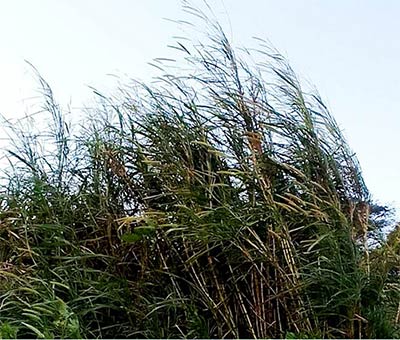
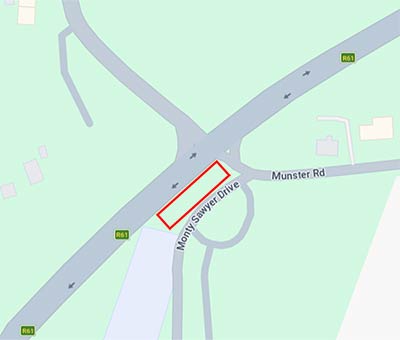
Napier grass, with the botanical name Pennisetum purpureum, is native to tropical grasslands in Africa. Also known as Elephant Grass or M'fufu Grass, this species is recognized worldwide as a highly nutritious and easy to manage crop for cattle farmers in many countries, with several hybrid forms currently being cultivated to improve the production of farmers. Despite this agricultural value, it is listed as a Category 2 Invasive: Permit Required in alignment with the NEMBA (National Environmental Management: Biodiversity Act, 2004) meaning that "a landowner on whose land a Category 2 Listed Invasive Species occurs or person in possession of a permit, must ensure that the specimens of the species do not spread outside of the land or the area specified in the Notice or permit".
In their Conservation efforts, the Munster Conservancy remains aware that not all exotic plants are considered invasive or threatening; similarly, depending on context and purpose, even indigenous plants may become threatening to the biodiversity in a particular area. Like many perennial grasses and herbs, Napier Grass forms tussocks or tufts that grow by means of rhizomes situated below ground and when the main stem is cut back, this rhizome simply coppices, producing many smaller shoots that spread vertically underground. Shoots can grow to a height of 4m and are thick and leafy. This makes it perfect for areas where it is being constantly grazed and trampled, but far from ideal in sections of Munster where smaller shrubs, indigenous grasses and more delicate plants will be pushed out or overgrown. Killing the plants off with herbicides such as Kaput paint-on gel has also proven ineffective in the past, despite several attempts by the MC Alien Invasive crew.


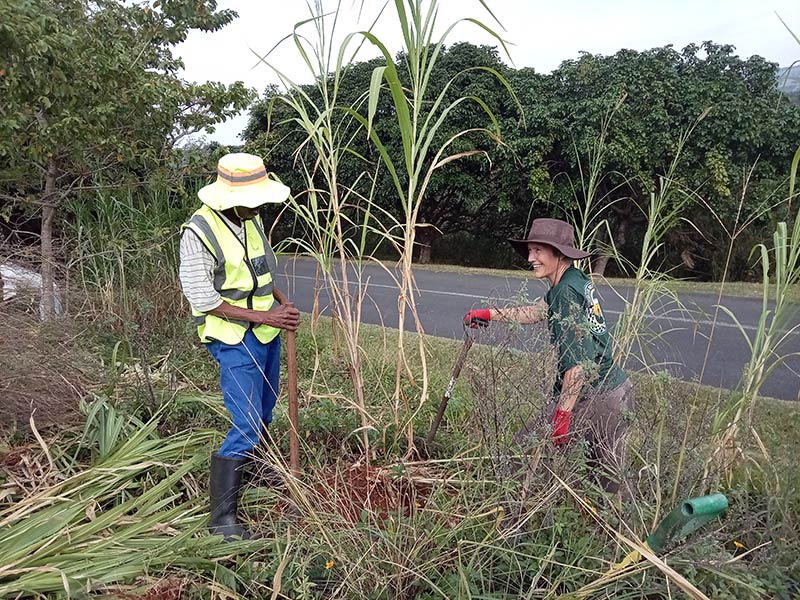
For this reason, the team that gathered on Saturday opted for manual removal, digging up the rhizomes and removing all cut stems, leaves and roots from the area. Before getting stuck in with spades and pick-axes, the team of 15 plus were given an informative talk by Jeanne-Louise Kinsey on Napier Grass specifically and alien invasive removal in general. You can watch this presentation on our YouTube channel.
In her talk, Jeanne-Louise mentioned the benefits of using a natural weed control, such as shade, to diminish or eradicate certain invasive species. She noted that one of the strategies used by many farmers to control Napier Grass on their property is to cut back the plant in an area, and then to densely cover that same area with the cut stems, shoots and leaves, depriving any new shoots of light and therefore minimising regrowth. It is not yet known whether this strategy will prove effective in Munster, but a test patch was created by the group on the day and will be monitored over the next few months.

Although Napier Grass was the primary target for the day, several other plants considered invasive in the area were also identified, including Chromalaena (Chromalaena odorata) and Khakibos (Tagetes minuta). Commonly known as Siam weed or Jack in the Bush, Chromalaena is native to the Americas and introduced in Asia, south and west Africa, and parts of Australia. While it is manageable in its native habitat and not prone to replacing other plant species, in Africa it is considered a transformer species, forming dense mats that may smother other vegetation. Part of its success as an invader is its a plastic morphology: it forms a compact shrub up to 3m tall in open areas, whereas under and alongside trees it can scramble up to 10m.
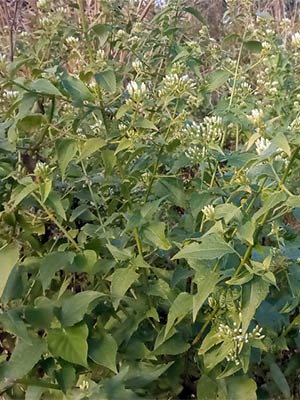
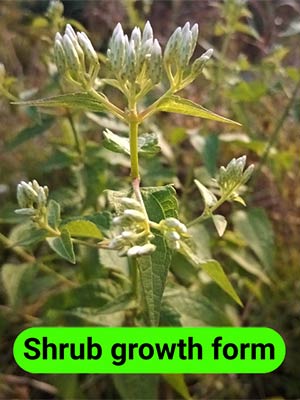
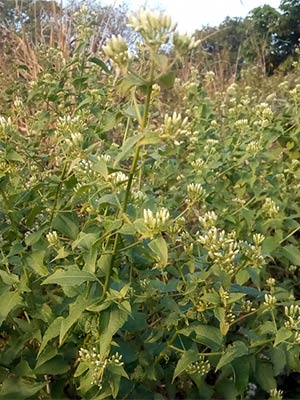
Fortunately, young plants can be easily uprooted – as was proven on the day by team members who were able to pull many up by hand, without the use of spades or picks. Older plants with woodier roots are not as readily removed, but can be cut back and then immediately treated with herbicide. According to the Agricultural Research Council (ARC), Chromalaena has been shown to have two centres of invasion: the first from India and spreading to Asia and Oceania, and the second appearing in south-eastern South Africa in the 1940s. The latter is now considered the South African biotype and appears to be managed more readily through burning than the Asian/West African biotype. At present, according to the AGR, Chromalaena is becoming one of the most widespread, abundant and damaging plants in the world. Several projects have been initiated to test biological control of the plant.
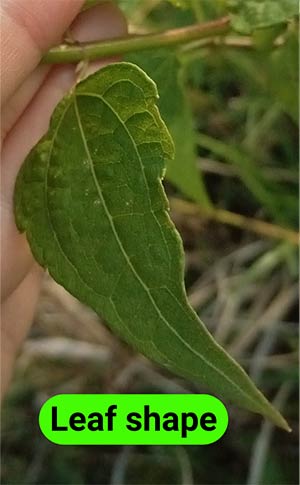
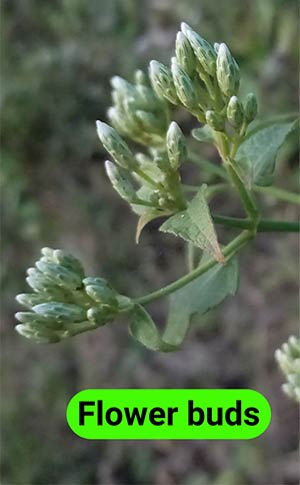
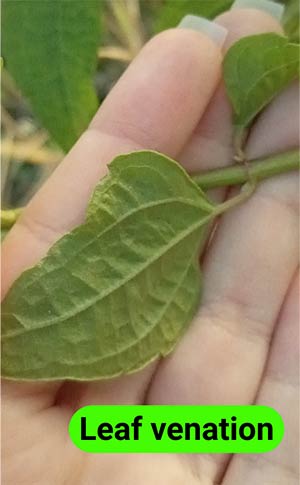
Currently, Chromalaena plants are growing throughout Munster both as small bushes and larger scrambling shrubs. MC team requests that you bring to our attention any dense stands where management may be necessary. The plant can be easily identified by the following characteristics: three-veined from the base of the leaf, midvein raised below, triangular shape leaves with blunt proximal margins, opposite leaves, clustered flower buds with fluffy purple-white flowers, shrub or scrambler. Chromalaena can, however, be confused with similar native or endemic species such as Natal Hempvine (Mikania natalensis) which has similar looking leaves and flower buds so it is preferable that you contact the MC team for a positive identification before removing any plants.
Khakibos or Khakiweed (Tagetes minuta), originally from South and North America, is now considered a naturalised exotic weed in South Africa. The common name Khakibos, is derived from the khaki coloured uniforms of the British soldiers during the Anglo Boer War (1899-1902) since the hardy plant was introduced with the imported fodder for the British Army's horses. As is the case with many plants that are considered 'weeds', they are never simply a nuisance without also having potential environmental benefits and cultural value. Khakibos is a pioneer plant most often found growing in disturbed areas, such as old cultivated lands, abandoned gardens, roadsides and waste places. As a pioneer plant, its roots assist in stabilising disturbed soils. Its pungent odour when crushed is also known to repel insects, including flies, mosquitoes and ticks. The flowers are mostly pollinated by insects and honeybees while seeds are dispersed through a diversity of mechanical means including wind, rain and bird activity. At present, this plant is not considered threatening to the Munster environment and appears to be growing only sparsely and in very isolated areas.
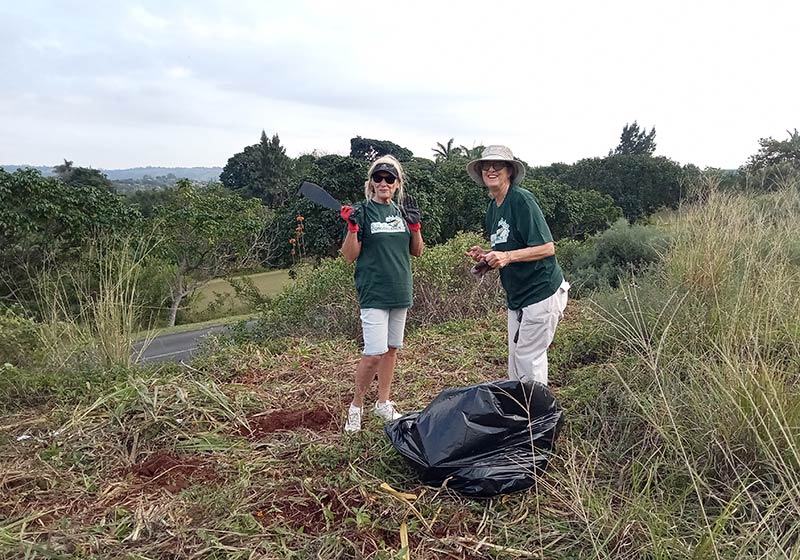
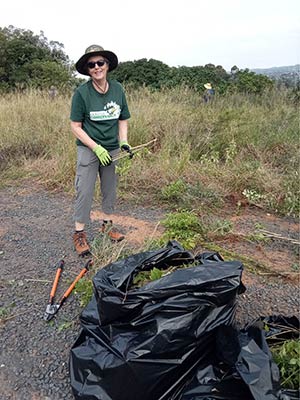
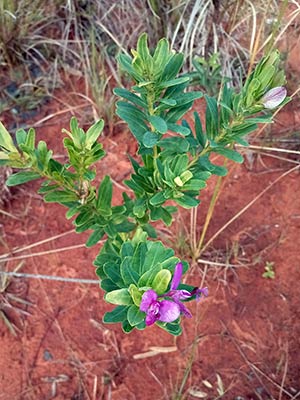
After the introductory talk, the team spread out across the embankment and worked flat out from 9am until 12.00pm. Apart from removing the invasive species, any litter discovered (such as plastic cartons, shopping bags, broken glass, tins, and plastic bags) was also gathered and piled for removal. In between the invasive species, many indigenous herbs and naturalised shrubs and flowers were noted including: Elegant Witchweed (Striga elegans), September Falsepea (Polygala myrtyfolia), Coastal Dayflower (Commelina erecta) and Gold Dwarf Morning Glory (Hewittia malabarica).


The Conservancy aims to keep abreast of regulations on the control and management of invasive species, and also to work sensitively with the environment in the hopes of supporting biodiversity and natural balancing actions. With this aim in mind, these AIP team events are going to be a regular occurrence with the next one already planned for Saturday 11 July. Participation on the day by Conservancy Members, young and old, is welcomed.
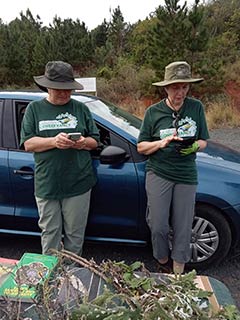
Jeanne-Louise and Dominique
researching
If you don't feel energetic enough to dig or slash, consider joining the event to assist with species identification, debris piling and documentation. Also beneficial to the project are donations of money (to subsidise workers and contribute to costs of petrol for the removal of debris), or equipment in the way of spades, pickaxes, rakes or gloves, or light refreshments for the workers.
You can also contribute by sponsoring your regular gardener for the event by covering the costs of their labour, and providing them with transport and equipment on the day.
If you are keen to participate, or have any suggestions or questions, contact Jeanne-Louise on WhatsApp (her number is available on the group chat) or contact us.
References:
"Napier Grass: The Nutritious and Versatile Forage Crop for Livestock Feeding", The Farmer's Journal Africa, April2,2023
Ndou, M, & Koekemoer, M. "Tagetes minuta", SANBI (South African National Biodiversity Institute), February 2017
"Alien Invasive Plants List For South Africa", 13 February 2019
Hickman, M. "Alien Invasive Weed Control: Elephant Grass Napier Grass", 22 July 2022
"What is Chromalaena?", 2014